
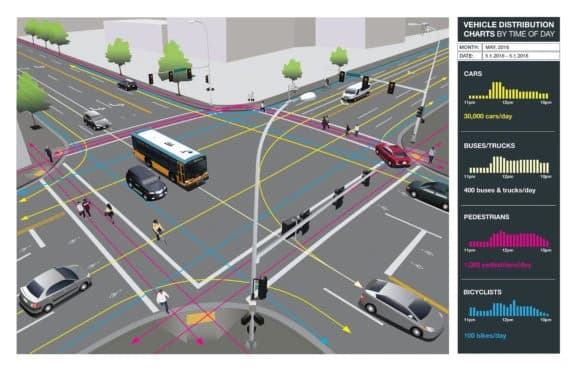
ONFIX Deployment in Nairobi CBD: Cutting Congestion and Boosting Safety with Data-Driven Insights
How a city authority used ONFIX to reduce peak-hour congestion by 20% and improve emergency response times through predictive modeling and real-time data fusion.
Nairobi's CBD grapples with chronic traffic congestion, impacting productivity and safety. A city authority partnered with Boldstreet Partners to implement ONFIX, a smart city platform that ingests camera feeds, vehicle telemetry, and sensors for predictive analytics. This case study outlines the urban challenges, ONFIX's tailored features, deployment journey, quantifiable outcomes, and strategic insights for scaling smart infrastructure in African cities. We expand on use cases including corridor management, event handling, and pollution mitigation to demonstrate practical applications.
Challenge
- Severe congestion on mixed-transport routes, causing daily economic losses and higher accident rates.
- Reactive emergency responses based on reports, delaying critical interventions.
- Data silos leading to inefficient infrastructure planning and budget allocation.
Solution
- Edge nodes normalized diverse data into unified streams for real-time analysis, supporting use cases like live traffic monitoring and anomaly detection.
- Predictive models forecasted congestion 30-60 minutes ahead, enabling proactive signal adjustments and rerouting suggestions for drivers.
- Dashboards and APIs provided optimized routes, ETAs, and alerts to operators and public apps, facilitating citizen engagement in traffic management.
- What-if simulations supported policy decisions like lane additions or restrictions, allowing testing of scenarios such as temporary closures for events.
Implementation
- Piloted in 5 CBD zones, integrating 200+ cameras and sensors over 3 months.
- Trained traffic officers on dashboards and integrated with emergency protocols.
- Public API rollout for apps like navigation services to disseminate real-time info.
- Iterative model tuning with local data for accuracy in Nairobi's traffic patterns.
Results
- 20% reduction in peak congestion, saving commuters an average of 15 minutes daily.
- 30% faster emergency responses through predictive alerts.
- Data-driven investments justified a $2M infrastructure upgrade with projected 15% further efficiency gains.
- Improved air quality with 10% drop in PM2.5 during restrictions.
Key Learnings
- Integrating diverse data sources unlocks holistic urban insights.
- Citizen-facing APIs amplify impact by empowering public decision-making.
- Simulation tools bridge the gap between data and policy action.