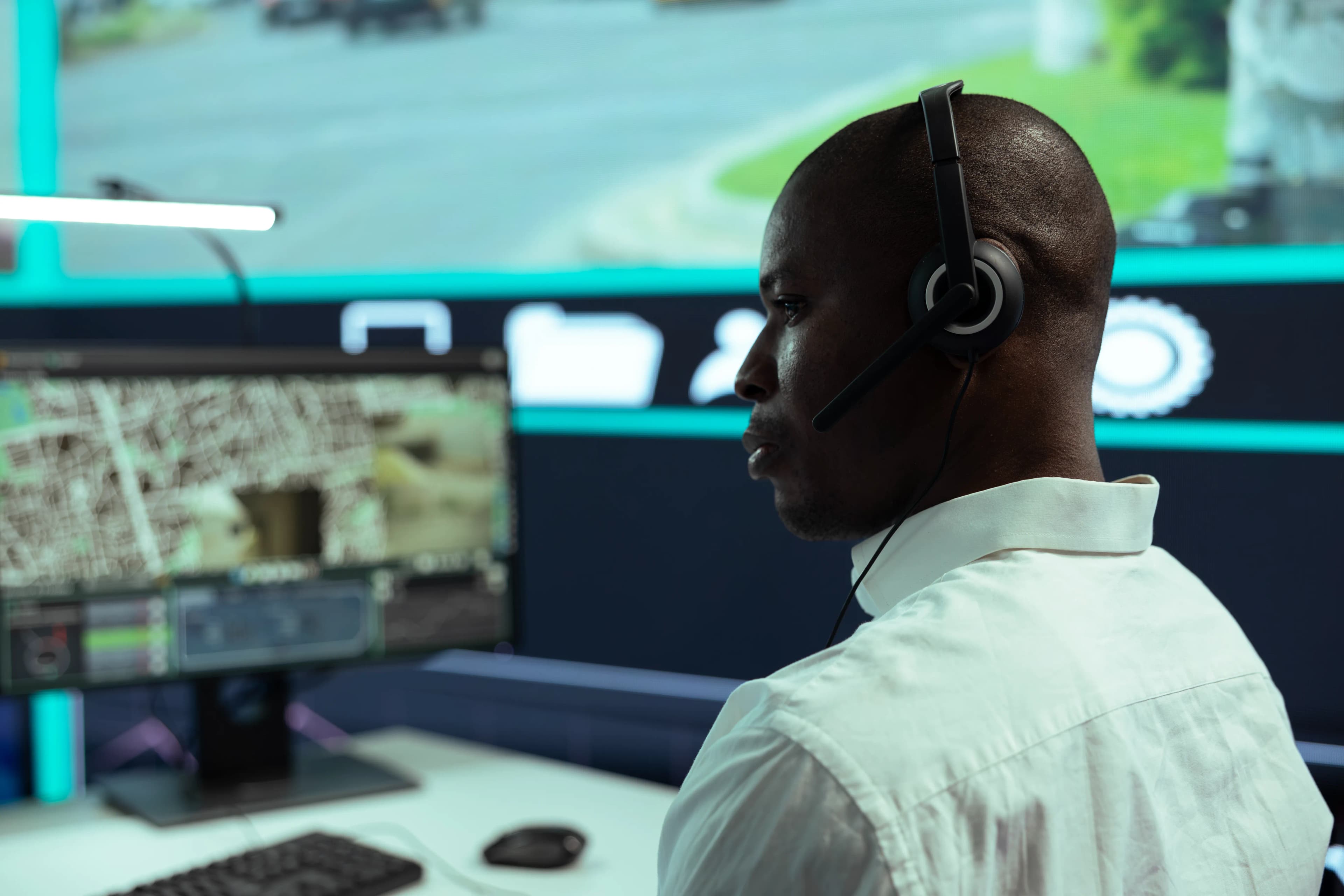
Security in modern urban environments, especially in bustling cities like Nairobi, demands more than just passive observation. It requires an integrated system that can anticipate, detect, and respond to threats in real time. Traditional security measures often fall short in high-density public spaces such as malls, transport hubs, and event venues, where the sheer volume of activity can overwhelm human operators. RAVEN, developed by Boldstreet Partners, addresses these challenges head-on by leveraging advanced AI technologies including computer vision, audio detection, thermal sensing, and blockchain logging. This multi-modal approach transforms raw data from various sensors into credible, actionable intelligence. For Kenyan security teams, mall operators, and municipalities, RAVEN isn't just a tool—it's a paradigm shift from reactive measures to proactive prevention, ensuring safer public spaces and reducing the risk of terrorism and other threats. In this comprehensive guide, we'll explore why conventional systems fail, how RAVEN revolutionizes surveillance, real-world scenarios, operational benefits, ethical considerations, and a step-by-step implementation checklist to get started.
Why traditional CCTV fails
In many Kenyan public spaces, traditional CCTV systems are the backbone of security, but they come with significant limitations that hinder effective threat prevention. Without intelligent filtering, these cameras generate endless streams of footage—hours upon hours of video that human operators simply cannot monitor continuously without fatigue setting in. This leads to missed anomalies, such as suspicious behaviors or unattended items, which could escalate into serious incidents. For instance, in crowded areas like Westgate Mall or Uhuru Park, the volume of visual data is overwhelming, making it nearly impossible for security personnel to spot threats in real time.
Moreover, manual triage processes exacerbate the problem. When an alert is raised—often based on basic motion detection—it requires human review, which is inherently slow. By the time a potential threat is identified and verified, precious minutes have passed, allowing situations to deteriorate. In terrorism-prone environments, this delay can be catastrophic, as seen in past incidents where response times determined the extent of damage and loss of life.
Finally, forensics in traditional systems lack robust tamper-proof mechanisms. Evidence collected from CCTV is often vulnerable to manipulation or challenges in court due to unclear chains of custody. Insurance claims and legal proceedings become protracted battles over authenticity, eroding trust in the system and complicating post-incident resolutions for Kenyan authorities and businesses alike.
How RAVEN changes the equation
Multi-modal detection — RAVEN goes beyond visual inputs by integrating multiple sensor types for a holistic view of the environment. Rather than relying solely on sight, it correlates data from audio sources (like detecting gunshots or glass breaks), thermal imaging (identifying sudden heat spikes from potential explosives), and even crowd movement patterns. This fusion creates high-confidence alerts by cross-verifying signals, significantly reducing false positives that plague single-mode systems. For Nairobi's security teams, this means focusing resources on genuine risks, such as abnormal crowd surges in busy markets, instead of chasing shadows.
Edge-first inference — Processing happens at the edge, right on the device, ensuring that raw video footage remains local and secure. Only anonymized event metadata and validated clips are transmitted to central systems, which not only speeds up detection but also aligns with data privacy regulations. This architecture minimizes latency, crucial in time-sensitive scenarios like preventing a terrorist act in a public venue, while protecting individual privacy by avoiding unnecessary data centralization.
Priority scoring & playbooks — Every alert generated by RAVEN includes a confidence score based on the strength of correlated data. High-confidence events automatically trigger predefined playbooks, such as sealing perimeters, dispatching patrols, or notifying first responders via integrated communication channels. This automation streamlines operations for mall operators in Kenya, turning potential chaos into structured, efficient responses that save lives and resources.
Blockchain-anchored evidence — To address forensic vulnerabilities, RAVEN hashes every verified incident bundle to an immutable blockchain ledger. This creates court-admissible audit trails that prove the integrity of evidence from capture to courtroom. For insurers and legal teams in Kenya, this simplifies claims processing and strengthens cases against perpetrators, reducing the administrative burden and enhancing overall system credibility.
Concrete scenarios
Unattended object in a mall: Imagine a busy corridor in a Nairobi shopping center like Two Rivers Mall. RAVEN's computer vision detects an object left behind, while audio analysis picks up on unusual silence around it and temporal patterns confirm it's been unattended for over six minutes. Crowd dynamics, analyzed through movement heatmaps, suggest people are subconsciously avoiding the area. RAVEN escalates this to a high-confidence 'left-object' alert, enabling the control room to initiate a targeted sweep with minimal disruption, avoiding unnecessary evacuations that could cause panic or economic loss.
Flash crowd before an attack vector: In scenarios leading up to potential terrorism, subtle signs often precede major events. RAVEN correlates multiple low-signal indicators—such as sudden directional crowd surges, clustered group formations that deviate from normal patterns, and elevated heart rate or heat signatures detected via thermal sensors. These are fused into a high-priority alert, allowing security teams to preemptively intervene, perhaps by increasing patrols or alerting authorities, thus averting disasters in high-risk areas like bus terminals or public gatherings.
Operational outcomes (what organizations achieve)
Faster detection-to-response: Pilot deployments of RAVEN have demonstrated dramatic reductions in Mean Time to Detect (MTTD) and Mean Time to Respond (MTTR). By using multi-sensor fusion, alerts are generated and acted upon in seconds rather than minutes, leading to more effective threat mitigation in Kenyan urban settings where rapid response is critical.
Fewer false alarms: Traditional systems often result in alert fatigue due to high false positive rates. RAVEN's sensor fusion approach filters out noise, reducing unnecessary patrols and allowing security personnel to focus on verified threats, which optimizes resource allocation and lowers operational costs for municipalities and private operators.
Stronger legal position: With blockchain-secured evidence, investigations are shortened, and outcomes are more favorable. Insurers process claims faster, and courts accept the tamper-proof records, providing Kenyan organizations with a robust defense mechanism that enhances accountability and trust in security operations.
Ethics & privacy
Ethics and privacy are at the core of RAVEN's design philosophy. Built with privacy-first defaults, the system blurs faces and anonymizes data at the edge, ensuring minimal retention of personal information. Role-based access controls limit who can view evidence, and deployments are recommended to include clear signage informing the public of surveillance activities. This aligns with Kenyan data protection laws and international standards, fostering public trust while delivering powerful security capabilities. Boldstreet emphasizes transparent policies to balance safety with individual rights, making RAVEN a responsible choice for ethical surveillance.
Implementation checklist
Begin with a comprehensive site risk assessment and audit of existing cameras to identify coverage gaps and integration points in your Nairobi venue or public space.
Launch a pilot program covering 3–6 camera zones, incorporating audio and thermal sensors to test multi-modal detection in real-world conditions.
Integrate RAVEN with your existing control room software and emergency services protocols for seamless alert escalation and response coordination.
Develop and rigorously test incident playbooks tailored to your environment, ensuring that high-confidence alerts trigger appropriate automated actions.